




Flowering season 2016
info: in the northern part of the forest, called ‘Keldergat’, trees have been felled this year (wood extraction). Trunks and crowns are lying in various places in that part of the forest and there are piles of firewood along the trails. From 1 March to 30 June however, the wood extraction stops (“schoon” time) and the loggers are not allowed to continue their work. “Schoon” time comes from the German “Schonen” meaning ‘save’, ‘protect’. The “schoon” period helps to protect the vegetation (spring flowers), to ‘save’ and not to disturb the nesting birds.
Permission for professional photo shoots, with or without models, or film recordings must be requested via the box office. In the Hallerbos you must always stay on the paths, also when taking pictures and filming. The soil and vegetation are fragile and very sensitive to trampling. The use of drones is not allowed in the forest.
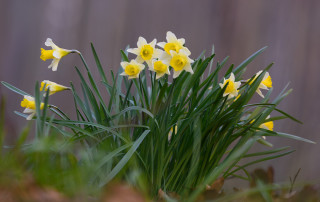
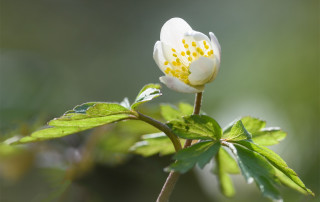
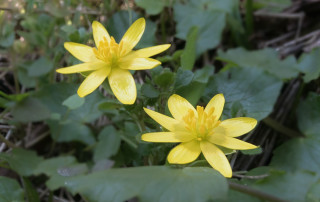
Groups of wild daffodils can now be seen in the wood. But many plants have yet to start flowering. The beautiful period for the daffodils (‘Easter flower’ in Dutch) will be the second half of March. Small flowering wood anemones appear, but do not form white carpets yet. Every day more flowers of celandine appear along the edges of the paths that get more sunlight.
Monday April 4th, road works will start on the Nijvelsesteenweg. More information about the accessibility of the forest during these works will follow shortly. The forest remains accessible by public transport. The 155 and 156 lines of ‘De Lijn’ will follow their usual route. However, the line 114 of the TEC will be deviated from its usual route. The bus stop at the forest will be moved to the Kasteelbrakelsesteenweg.
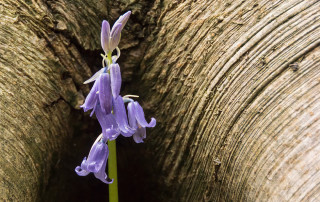
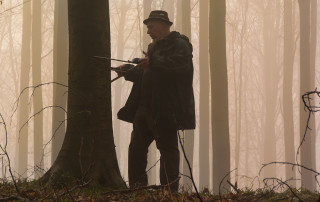
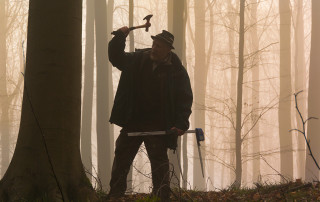
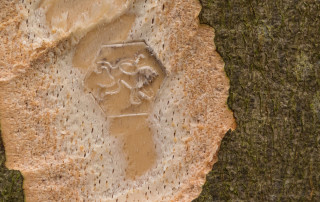
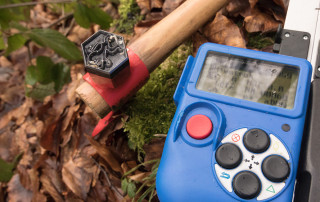
Well protected between the roots of a thick beech, a first lonely wild hyacinth is growing. This month, some trees will be measured and marked (with a hammer as wooden seal stamp), they will be sold by auction in June. To measure the trees, the foresters use a digital measuring clamp for the first time. After determining the species of tree and measuring its circumference, the bark of the tree is removed with the ax-side of the hammer, and with the Royal stamp-side the shape of a lion is beaten in the heartwood.
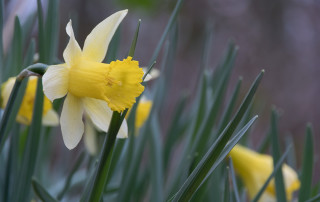
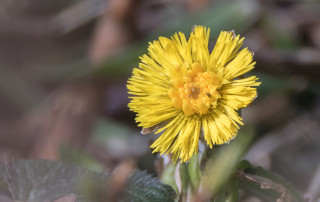
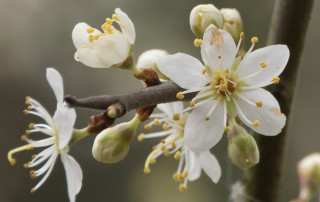
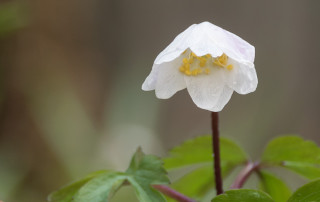
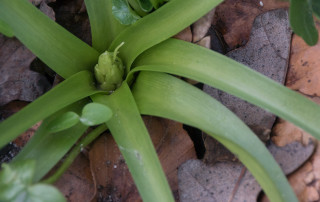
Due to the cold, wet weather in the second half of February, growing slowed down. The wild daffodils are coming in bloom, but full bloom is to be expected in the second half of the month. The small yellow flower that resembles the sunrays is coltsfoot which blooms before the leaves appear. In the edges of the wood, white flowering Blackthorn bushes catch the eye. The first white flowers of wood anemone are flowering, they are still very small. The leaves of the bluebells pierce through the brown carpet of old beech leaves and give the forest floor a green touch. On the warmest places the first flower buds start to peep through the leaves. Roadworks on the Nijvelsesteenweg will have a significant impact on the accessibility of the forest from the beginning of April. More information will follow when available.
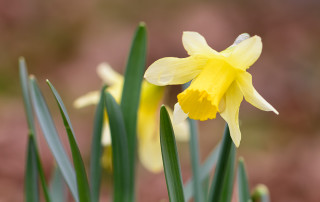
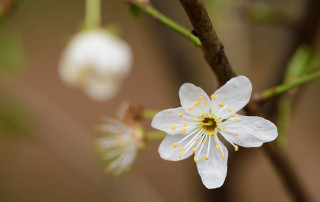
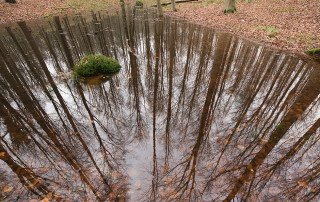
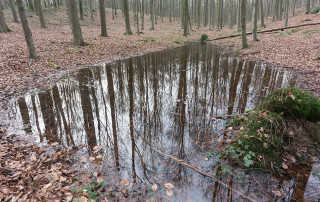
The first wild daffodils are blooming, this is very early, about a month earlier than last year. But there are only a few; most daffodils don’t have their leaves yet. The flowers of the first blackthorns that are already flourishing have suffered from the heavy rains of the past few days. All that rain makes for puddles with beautiful reflections.
The weather forecast for the next fourteen days: lower temperatures. This will affect blooming, which will slow down.
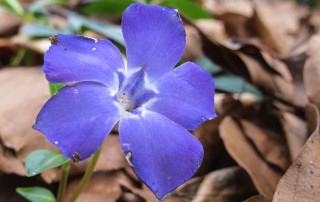
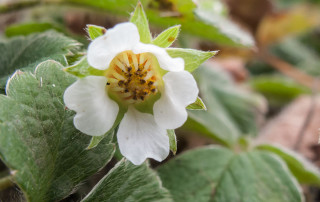
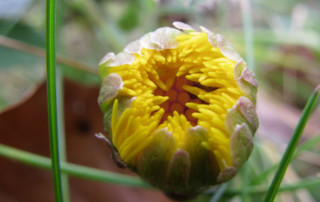
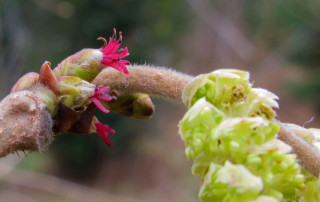
It seems a bit like spring in winter. Lesser periwinkle and barren strawberry bloom earlier than last year. The yellow flowers of coltsfoot are also ready to sprout. What is special about this plant, is that it flowers before the leaves appear, just like the blackthorn. The dried leaves of coltsfoot used to be mingled with syrup and sugar to make cough drops. Hence the scientific name “Tussilago” (chasing away cough). On the flowering hazel, the male, yellow hanging catkins catch the eye. Look for the less conspicuous pretty little female red flowers just on top of the catkins, they do not have any petals.
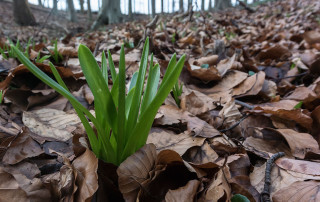
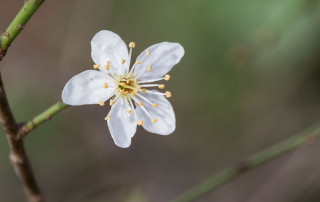
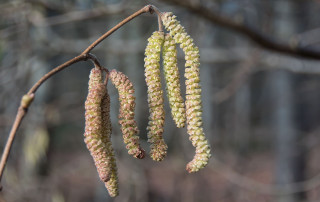


The first hyacinth leaves peep up through the carpet of beech leaves. Even if this is very early, it doesn’t guarantee an early or long flowering period. We’re still in the middle of winter. Any long cold period in the next two months may slow down the flowering. Along the forest edges where the sunlight is, blackthorn and the hazel are flowering. The male, yellow hanging catkins of the hazel catch the eye.