




Flowering season 2016
info: in the northern part of the forest, called ‘Keldergat’, trees have been felled this year (wood extraction). Trunks and crowns are lying in various places in that part of the forest and there are piles of firewood along the trails. From 1 March to 30 June however, the wood extraction stops (“schoon” time) and the loggers are not allowed to continue their work. “Schoon” time comes from the German “Schonen” meaning ‘save’, ‘protect’. The “schoon” period helps to protect the vegetation (spring flowers), to ‘save’ and not to disturb the nesting birds.
Permission for professional photo shoots, with or without models, or film recordings must be requested via the box office. In the Hallerbos you must always stay on the paths, also when taking pictures and filming. The soil and vegetation are fragile and very sensitive to trampling. The use of drones is not allowed in the forest.
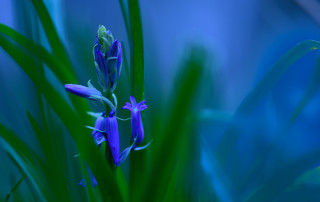
Bluebells turn the forest green for now, with their long tapering leaves. There are some flowers already, but not enough to turn the forest blue.
If you, like many visitors, wish to take pictures of this magical setting, always keep in mind to stick to the paths. This makes a huge difference to preserve the flowers. All official trails are on the hiking map. If the forest ground is covered in leaves, this is not a path.
Sticking to the path, you will come along stunning places. On many places the flowers grow just next to the path, walk a bit further along the path, and you will see one beautiful setting after the other. Do not ever set foot on forest soil. Getting trampled on, and compaction of the soil, is the worst for spring bloomers. On these places, no flowers will grow any more.
So you too can play an important part in conserving this beautiful forest: sticking to the paths.
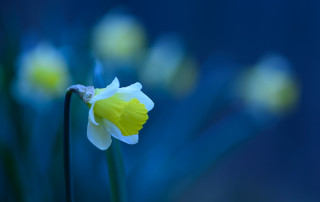
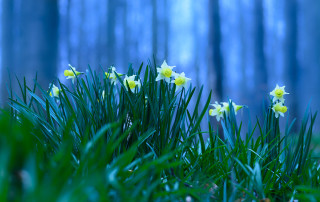
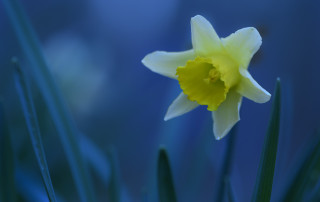
The wild daffodils are now beautifully in bloom. If they do not get damaged by fierce downpours over the next few days, they will also be nice next weekend. Carpets of white flowers of wood anemones start to form, especially if the sun is shining. A walk in the woods gives you a wonderful spring feeling.

There is a new edition of the hiking map. The map is available for free. See at this page.
Monday 4 April, road works will start on the Nijvelsesteenweg.
In the first week of the Easter holidays, the wild daffodils will be the most striking spring bloomers. If you come from far away, especially to see the bluebells, it’s best to wait a bit for a visit to the forest. Some bluebells start to bloom, but there is no purple blue carpet of flowers in the forest at this moment.
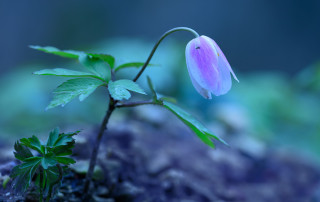
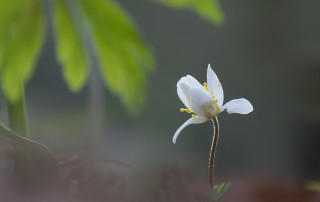
The daffodils are now at their most beautiful. Celandine, the other springflower with yellow flowers, blooms also beautifully. Everywhere in the forest, wood anemone flowers appear, like white little stars. But as with Celandine, they need the sun to open. When it rains, the flowers of celandine stay closed and the flowers of the wood Anemone hang down to keep their pollen dry. In the parts of the forest with bluebells, the green of their leaves is the predominant colour. With the softer temperature, blooming is gradually starting. But it is too early for a blue forest. The morning, when everything is still quiet in the woods, is the ideal time to observe roe deer. If you see a deer, it’s best to stand still and be very quiet. Then you have the chance that they do not run away immediately. Roe deer see every movement very well and they hear every sound with their big ears. The does are now pregnant. Dog-fanciers: keep your dog on a leash, so they do not hunt the deer.


From Monday 4 April till 30 July, there will be road works on the Nijvelsesteenweg. If you come to the forest by car in that period it is recommended to use Parking 1 Hogebermweg.
Better news is that next week the new version of the hiking map will be available. Just before sunrise and after sunset is “the blue hour”. A camera is more sensitive to the blue light than our eyes.
Due to the colder weather in the last month the evolution of the bloom has come on the same schedule of the last few years. Many wild daffodils are still in bud. The most beautiful period for the daffodils will be the last 10 days of March. Wood anemones start to bloom, but the plants and flowers are very small still. The bluebells are forming leaves now. Some flower buds are discernible, but deeply between the leaves, well sheltered for the cold. Celandine blooms beautifully along the edges of the paths.
If you can come only once to the forest, especially to enjoy the bluebells, you must have some patience, and wait for the first warm days of spring. If you have the opportunity to come several times, you can already enjoy the forest and its spring flowers. In the morning, woodpeckers are drumming to proclaim their territory, jays keep guard, nuthatches sing, the roe deer enjoy the quiet of the morning.