




Flowering season 2026
Permission for commercial or professional photo shoots, with or without models, or film recordings must be requested via the box office. In the Hallerbos you must always stay on the paths, also when taking pictures and filming. The soil and vegetation are fragile and very sensitive to trampling.
The use of drones is not allowed in the forest.
The bluebells, which have been blooming for a while, are beginning to wilt and form fruit. The petals are turning paler and falling off, the drooping flower stalk straightens, and the flowers, which hung downwards during flowering, straighten up. The young leaves of the beech trees provide more shade in the forest. Meanwhile, bear’s garlic is in full bloom and forms beautiful white carpets of flowers, especially in the damp valleys. With the young beech leaves remaining transparent for the time being, it is still delightful to walk and enjoy spring in the forest.
At this moment, the forest is at its most beautiful. Intense purple-blue seas of bluebells and the sunlight falling through a stained glass window of young, transparent beech leaves create a fairytale atmosphere. But every day, countless beech leaves are added, and the canopy closes over the bluebells and there is less light in the forest. Along the edges of the paths, where there is more light, herb-Paris, greater stitchwort, Solomon’s seal, and yellow archangel are in bloom. Where the soil is somewhat moist and calcareous, bear’s garlic grows. That white carpet of flowers becomes clearer by the day. The typical garlic scent is already hanging in the forest in those places as well. And much earlier than May 1st, the first lily-of-the-valley are already blooming. Many spring flowers can now be found blooming together in the forest. Anyone wishing to visit specifically for the bluebells should come on one of the following sunny days.
With almost all the bluebells in bloom and the first fresh green, transparent beech leaves, the fairytale season has fully begun. It is moving fast, though. New young beech leaves appear every day. In the coming week, sunlight will reach the forest floor, creating a beautiful play of colors in all shades of purple-blue on sunny days. A delightful floral scent has also been hanging in the forest for several days now. The flowering of the wood anemones is not yet entirely over. Meanwhile, greater stitchwort, yellow archangel, and herb-paris are also blooming along the lighter edges of the paths. Anyone wishing to walk in the fairytale forest this year had better not wait too much longer. Every sunny day is a joy to behold the blossoming nature.
The bluebells are now the most striking spring bloomer in the forest. Especially on the plateaus that enjoy the sun all day long. On the flanks of the valleys, flowering is proceeding somewhat more slowly, but a blue-purple sea of flowers is gradually appearing there as well. On a sunny day, the wood anemones still provide a white carpet of flowers, but many petals have been damaged by the rain and the flowers are beginning to wilt. Due to the summer temperatures, the buds of the tall beech trees are starting to sprout. If it stays warm, things could move quickly now. For the time being, it is still the low, dominant trees that are getting leaves, but the tall beech trees will not take long to do the same. That is the start of the fairytale atmosphere in the forest. It is already there for those who love sun-drenched bluebell blossoms beneath the bare beech trees. Those who would rather also see the transparent green screen of young beech leaves and the play of shifting light and shadow patches in the purple-blue sea of bluebells better wait another week. But every visit to the forest on a sunny day is already worthwhile. Every day, blooming bluebells and fresh green young beech leaves are added. The oaks are already budding, and the shrubs standing beneath them already have leaves too. But those parts of the forest are wondrously beautiful as well. And, there is a delightful floral scent in the forest.
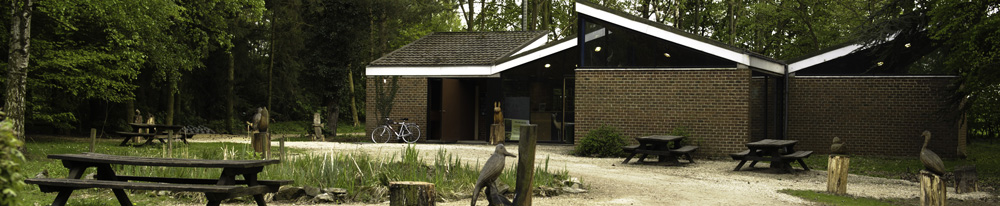
On sunny days, wood anemones create a beautiful white carpet of flowers in large parts of the forest. The many short but heavy rain showers do leave their mark on the petals, which become damaged. The plateaus that enjoy the warmth of the sun all day long turn a purplish-blue color. The long, narrow bluebell leaves begin to droop under their own weight, and the flowering stalks carry the flowers ever higher. But here, too, there are still many plants with flower buds. On the flanks of the valleys, flowering proceeds more slowly. Along the edges of the paths, moschatel blooms, with five tiny greenish-yellow flowers on a cube-shaped inflorescence, and lords-and-ladies lure moth flies into their spathes to pollinate the flowers in their inflorescences. After being confined for a night, they are released after receiving a shower of pollen to go and pollinate a nearby arum. Starting this weekend, temporary toilets will be available at parking 1a and at the parking lot at the forest museum, as well as a toilet cabin at the forest pavilion. The special traffic regulations also come into effect this weekend; you can find all practical information here. Be sure to bring good walking shoes and a bottle of water. Help protect the forest: always stay on the paths, even when taking photos, and even where no ropes have been placed.
The wood anemones are now in full bloom and are the most striking spring bloomer in the forest. Especially on sunny days, they create a snow-white carpet of flowers beneath the still bare trees. On the plateaus, more and more blue-purple flowers of the bluebells are appearing. For many plants, the flower buds have yet to appear or bloom open. As soon as the hyacint flower stalks begin to grow and their leaves droop, they will create a beautiful blue-purple sea of flowers. The flanks of the valleys are still green, as is usual at the beginning of the flowering season. Meanwhile, lesser periwinkle and dog violet are also blooming along the edges of the paths. The most striking bloomer along the paths is lesser celandine. Just like the wood anemones, they wait for the sun in the morning to open their yellow, star-shaped flowers. A less conspicuous yellow-flowering plant that does not even produce flowers every year is Belgian gagea. As far as is known, it propagates only vegetatively via division of the bulbs. Because it blooms before getting leaves, the blackthorn stands out particularly at the edges of the forest with its beautiful white flowers.