




Flowering season 2014
info: in the central part of the forest, (in the ‘Achtdreven’) trees have been felled this year (wood extraction). Trunks and crowns are lying in various places in that part of the forest and there are piles of firewood along the trails. From 1 March to 30 June however, the wood extraction stops (“schoon” time) and the loggers are not allowed to continue their work. “Schoon” time comes from the German “Schonen” meaning ‘save’, ‘protect’. The “schoon” period helps to protect the vegetation (spring flowers), to ‘ save’ and not to disturb the nesting birds.
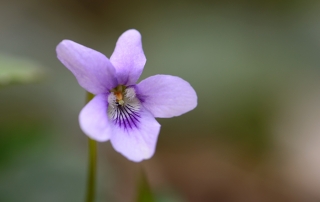
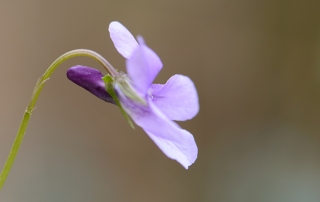
In the verges along the paths, early dog-violets are blossoming. Along the stream edges the yellow flowers of oxlips catch the eye.
There are wood anemones in abundance: everywhere, the forest floor is white and green. Every day more bluebells are flowering, but a “blue carpet” is definitely not yet there for this weekend.
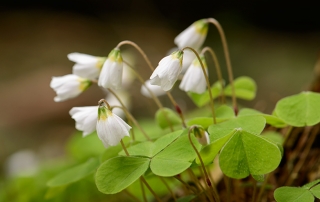
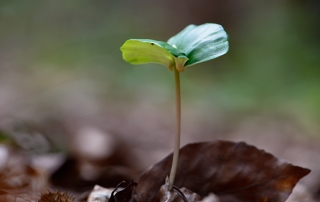
The wild daffodils are still pretty but they are starting to go over. Flowering anemones take over the forest. Under the conifers, white flowers of white wood sorrel are appearing.
Flower buds of wild bluebells are shooting up. The next warm period, in a few days time, might see the forest turn blue. The beechnuts that fell last autumn are awaking. They look just like young seedlings with “elephant ears”.
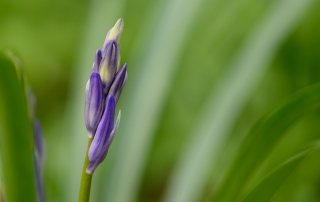
The sunny and warm first day of spring brings on the first flowering bluebells. The daffodils are now at their most beautiful. The white flowers of the anemones are like white stars on a deep green carpet of bluebell leaves. But the weather forecast is not brilliant for the next week. We won’t see a blue forest full of bluebells in March. If you come from far away, especially to see the bluebells, it’s best to wait a bit for a visit to the forest.
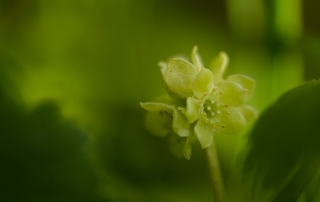
Moschatel blossoms with inconspicuous green flowers are in bloom. The daffodils are flowering nicely now. Deeply hidden between the leaves, the first buds appear on the bluebells. It’s still too early to see the first flowering bluebells. Hopefully there will be no more cold periods during late March and early April.
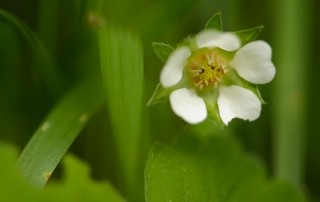
Hairy wood-rush is blooming on the flanks of the sunken roads. Barren strawberry is blooming along the paths. On humid chalky places the inconspicuous dog’s mercury is flowering.
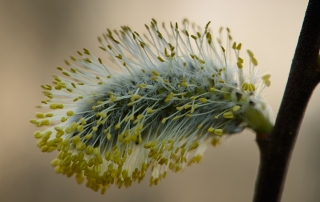
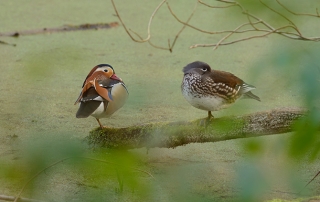
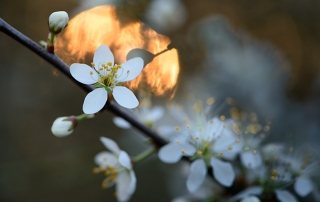


Flowering willow catkins provide pollen for the brimstone which hibernates as an adult, and now flutters in the forest. In the ‘Kapittelvijver’ (Chapter’s pond) toads find a partner, while a pair of Mandarin ducks is enjoying the setting sun. In the edges of the wood, white flowering Blackthorn bushes catch the eye.